NGC Ancients: Coins of the 20s
Posted on 15/07/2025
At the halfway point of the 2020s, there's no better time to reflect on coinage of the 20s. What did coins look like two millennia ago? For starters, they were dominated by Roman influence, reflecting those in charge of an empire that was approaching its peak.
Let's take a look at these objects of commerce at this fascinating point in history.
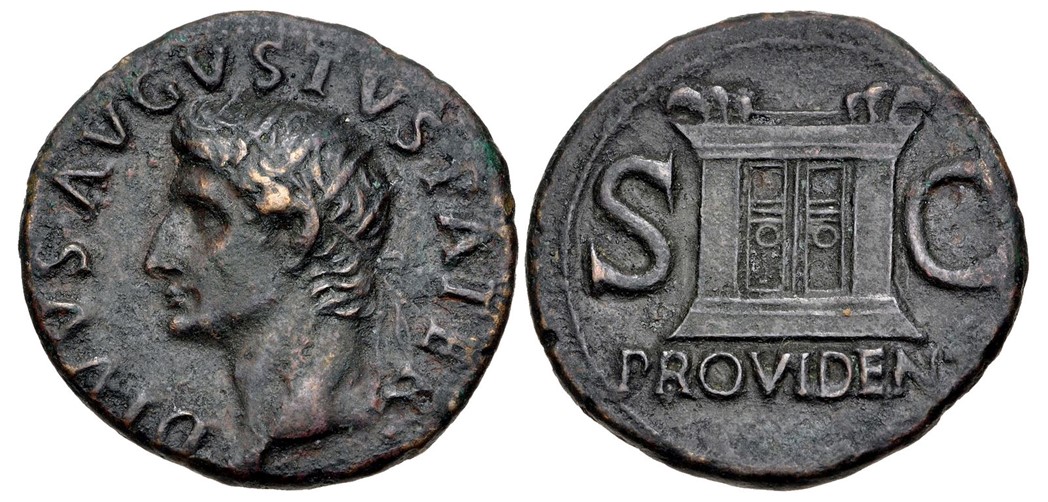 |
Though Augustus died in A.D. 14, Rome’s first emperor continued to appear on coins for quite some time. This base metal “as” struck circa A.D. 22-30 under his successor, Tiberius (A.D. 14-37), shows him with the title Divus Augustus, indicating the divine status granted to him after his death.
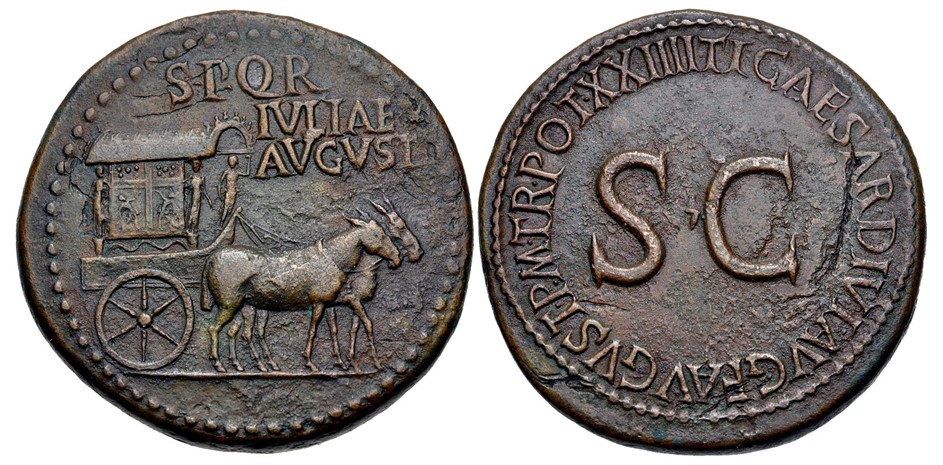 |
Augustus’ widow (and Tiberius’ mother) Livia continued to wield considerable power after her husband’s death. This brass sestertius was struck A.D. 22-23, apparently after she survived a serious illness. It shows a carpentum, a type of carriage that a woman of her status would have used, and the coin’s inscription refers to Livia as Julia Augusta, her name after she was formally adopted into the Julii family through a directive in Augustus’ will. She died in A.D. 29.
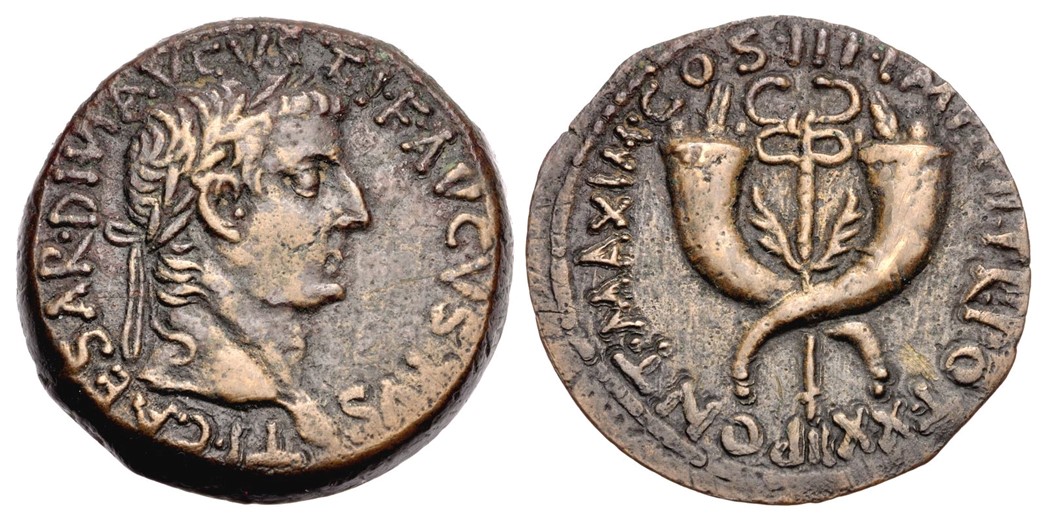 |
This bronze dupondius struck in Commagene (on the upper Euphrates River) in A.D. 19-20 shows Tiberius on the obverse and crossed cornucopias on the reverse. Tiberius was 55 when he became emperor, and he is remembered for being an effective ruler but also a reclusive one.
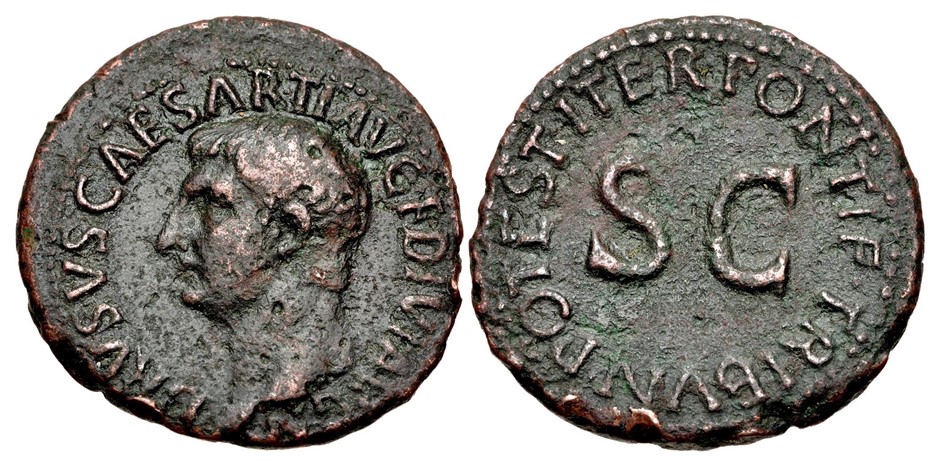 |
Tiberius’ reclusiveness is believed to be partly linked to the death in A.D. 23 of his son, Drusus Julius Caesar, who was to have been his successor. This base metal “as” struck under Tiberius in A.D. 22-23 shows Drusus.
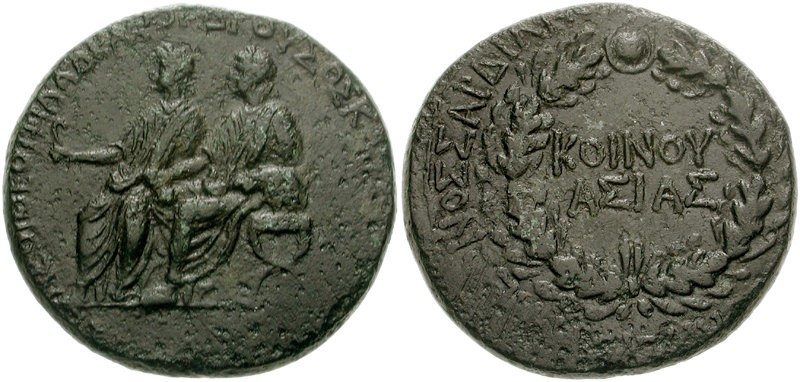 |
Drusus was preceded in death by his adoptive brother Germanicus in A.D. 19, another devastating blow to Emperor Tiberius. This base-metal coin struck in A.D. 23-26 in Sardes in Lydia shows Germanicus and Drusus seated. Germanicus was a capable general whose descendants included his son Caligula and grandson Nero, the third and fifth Roman emperors, both of whom are remembered for cruel reigns that ended in untimely and degrading deaths.
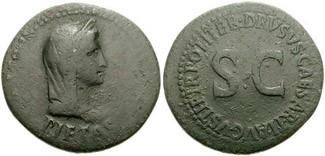 |
Drusus’ wife was Livilla, who is believed to be shown on this brass dupondius struck A.D. 22-23. Livilla was suspected of poisoning Drusus with her lover Sejanus, a praetorian prefect who wielded enormous power in the 20s.
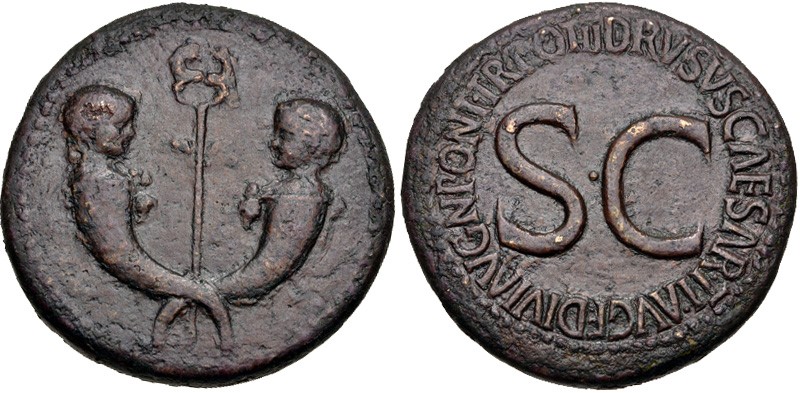 |
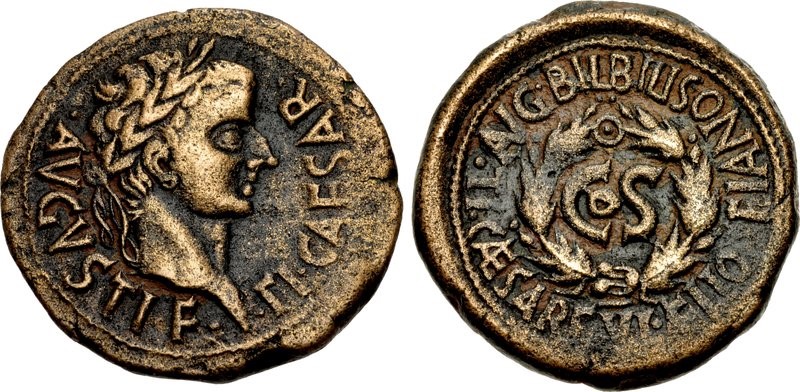
This brass sestertius struck in A.D. 22-23 shows the twin sons of Livilla and Drusus: Germanicus Gemellus and Tiberius Gemellus. Both were potential future emperors due to their family background, but that power instead went to Caligula in A.D. 37, who quickly found an excuse to eliminate such rivalry.
 |
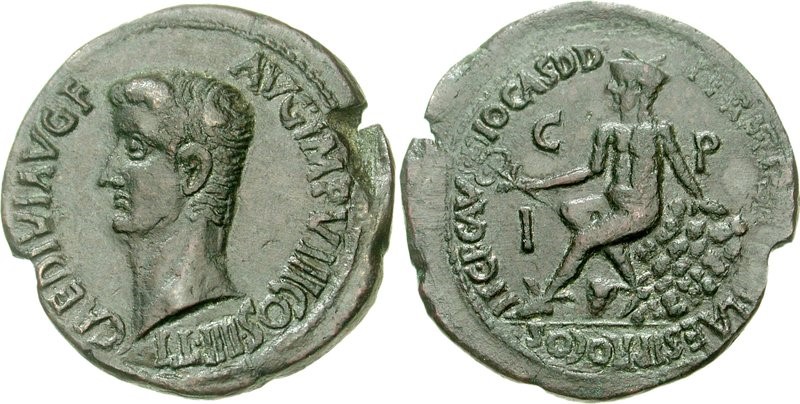
Though this base-metal semis was struck in A.D. 31, it shows the aforementioned Sejanus, a major political force in the 20s who positioned himself as a potential successor at a time when Tiberius seemed uninterested in wielding imperial power. However, when Tiberius became aware of the extent of Sejanus’ ambitions, which culminated in a coup that he intercepted, he had him executed in the fall of 31.
 |
This base-metal coin was issued in A.D. 23 by Quintus Junius Blaesus, an uncle of Sejanus. Around this time, Blaesus defeated a Berber revolt in Africa led by Tacfarinas and was given the honorary title “imperator,” or victorious general. In A.D. 31, amid Sejanus’ downfall, Blaesus was imprisoned and killed himself before he could stand trial.
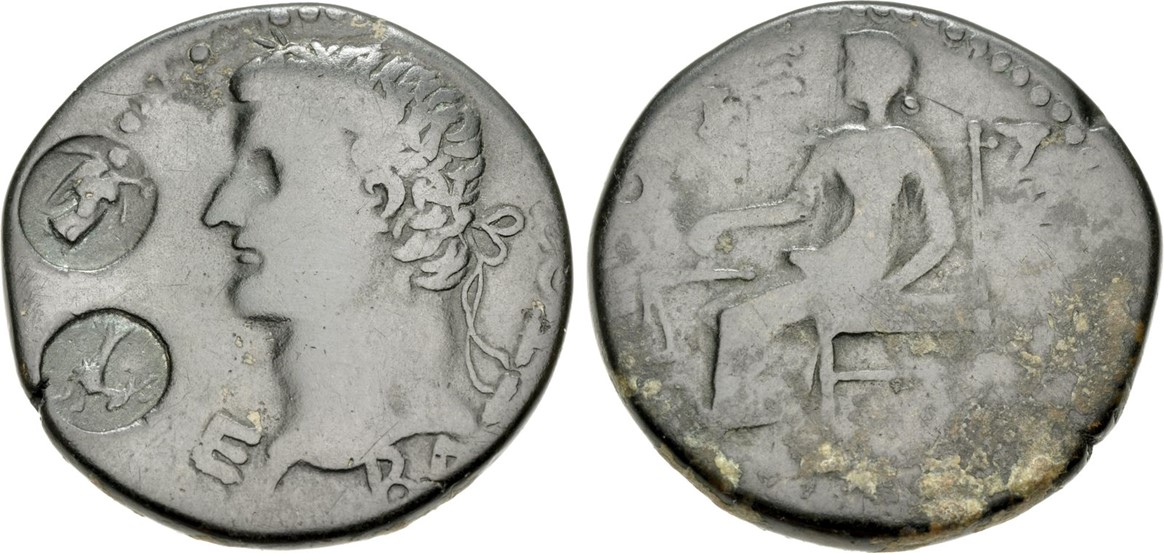 |
The Roman Empire was built from conquered kingdoms, including Pontus in Asia Minor, which was subdued almost a century before this base-metal coin from Amisus (on the Black Sea) was struck A.D. 28-29. It shows Tiberius on the obverse and Dike, a Greek goddess who was associated with justice, on the reverse.
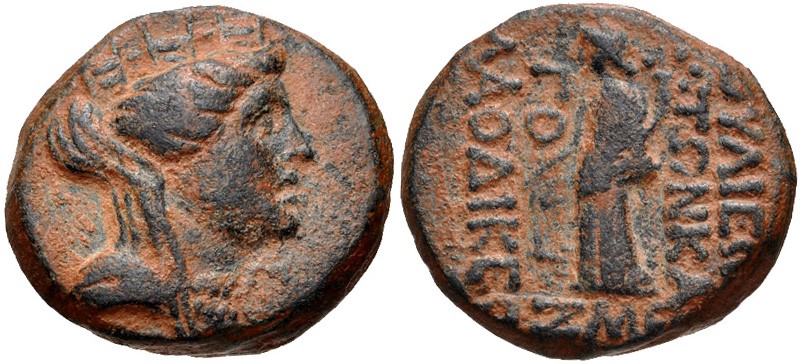 |
Far to the south of Pontus was the Seleucid Empire, which was also conquered by the Romans in the 1st century B.C. This base-metal coin dated to A.D. 28/29 is from Laodicea ad Mare, which was a city on the Mediterranean in what today is Syria. The coin shows Tyche, a Greek goddess who was thought to determine the fortunes of a city.
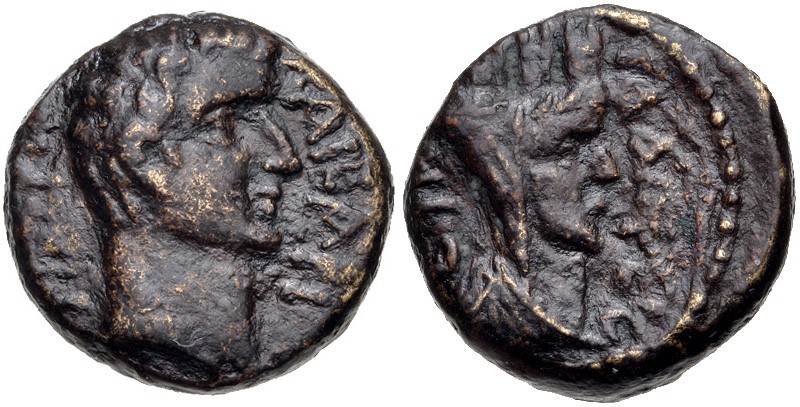 |
To the south of Laodicea ad Mare was the Decapolis, a group of ten Hellenistic cities located near the Sea of Galilee. These include Gadara (in modern-day Jordan), which struck this base-metal coin that dates to A.D. 28-29, showing Tiberius on the obverse and Tyche on the reverse.
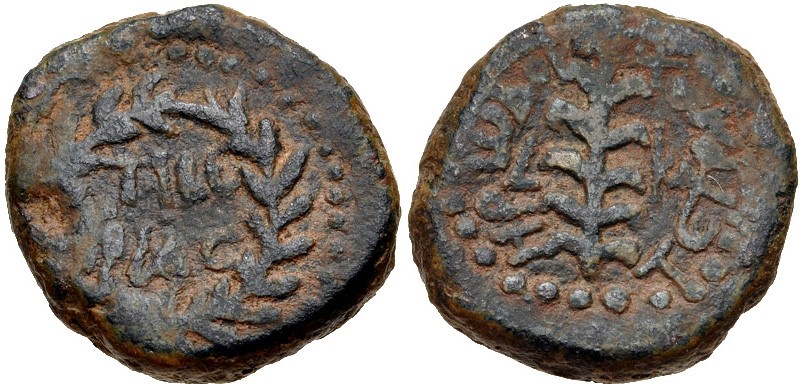 |
On the Sea of Galilee was the city of Tiberias, where this base-metal coin was struck in A.D. 20-21 under Herod III Antipas. He is most famous for his imprisonment and execution of John the Baptist, who had denounced his incestuous marriage. This coin was struck around the time of the founding of Tiberias, which was named after the Roman emperor and served as Herod III Antipas’ capital during his reign as tetrarch from about the time of the birth of Jesus until A.D. 39. Herod’s territory included Galilee as well as Perea to the south, located to the east of Jerusalem.
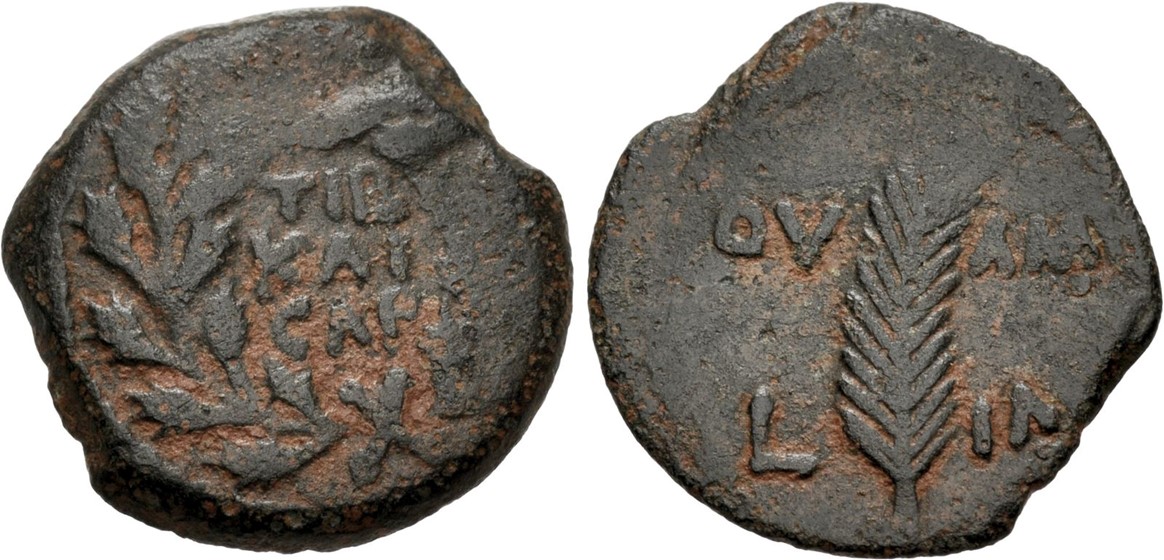 |
After the death of Herod “the Great” in 4 B.C., his kingdom was divided among his sister and his three sons. Jerusalem fell within the territory of Herod III Antipas’ brother, Herod Archelaus, but his reign was so erratic that the Romans took direct control of his territory. This base-metal prutah was issued at the Jerusalem mint under the authority of Roman Prefect Valerius Gratus in A.D. 24-25.
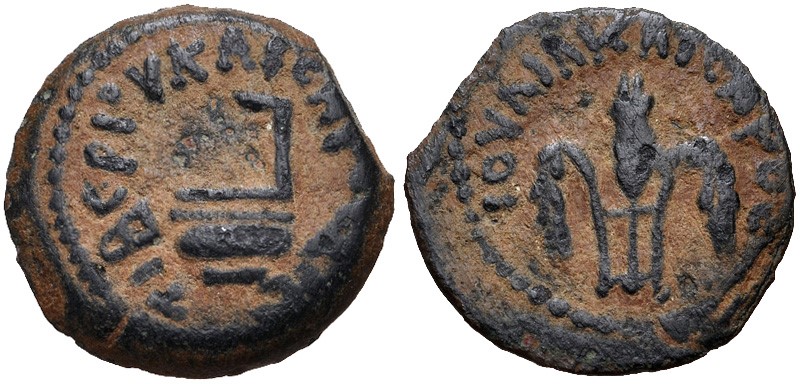 |
Valerius Gratus’ successor as prefect was Pontius Pilate, who issued this base-metal prutah in A.D. 29. Pilate is best known from the biblical account of the crucifixion of Jesus. According to the Gospel of Luke, after Jesus was arrested, Pilate sent him to Herod III Antipas, since it was in his territory Jesus had been most active. Herod III Antipas mocked Jesus and sent him back to Pilate, and Luke records that Herod and Pilate set aside previous ill feelings toward each other and forged a friendship.
 |
Both of the preceding Roman prutahs could possibly be examples of one of the most famous ancient coins: the Biblical “widow’s mite.” The Gospels of Luke and Mark tell of a poor woman who puts two small coins into the treasury of the Temple in Jerusalem. Jesus tells his disciples that her donation, though small, is amplified because she gave from the money she had to survive on, while others were giving from their wealth.
The exact type of coin isn’t specified in the Bible, but another commonly mentioned possibility among numismatists is the base-metal prutah struck under Alexander Jannaeus, who ruled Judaea 103-76 B.C. These coins, showing an anchor on one side and a star on the other, were so plentiful that they are believed to have still been in circulation a century after they were struck. Though less common, half-prutah denominations are also known and might also have been the coin mentioned in the biblical account. (Read more in this NGC Ancients column.)
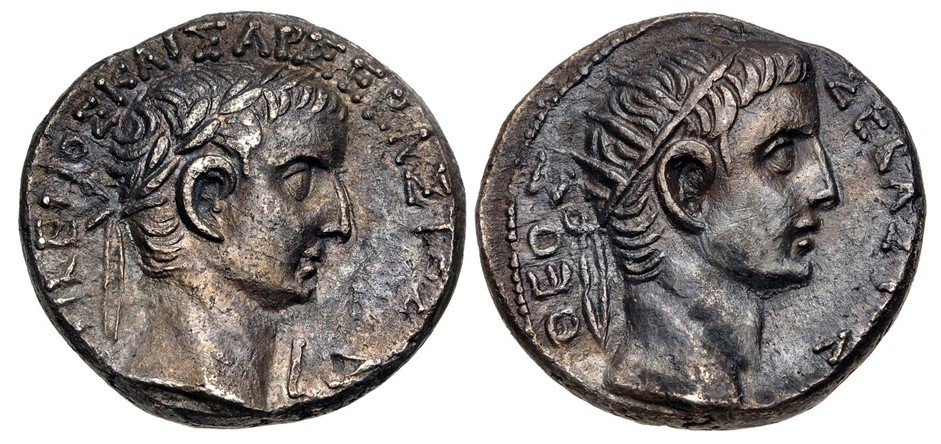 |
Further south along the Mediterranean coast and Nile River was the Ptolemaic Kingdom of Egypt, which was established by a successor of Alexander III “the Great” in 305 B.C. It was ruled by Greeks until 30 B.C., when Queen Cleopatra VII and her lover and Roman ally Marc Antony were defeated by Octavian, paving the way for him to become Emperor Augustus. This billon tetradrachm dated to A.D. 20-21 shows Tiberius on the obverse and the deified Augustus on the reverse.
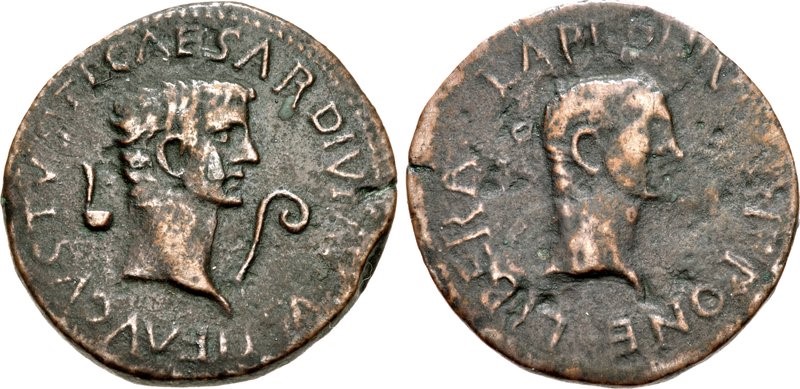 |
Far to the west on the North African coast was Numidia, which was administered by Roman Proconsul Lucius Apronius in A.D. 20-21, when this base-metal “as” was struck. It shows Tiberius on the obverse and Apronius on the reverse. Around this time, the Romans were dealing with the insurgency led by Tacfarinas, who was defeated in A.D. 24.
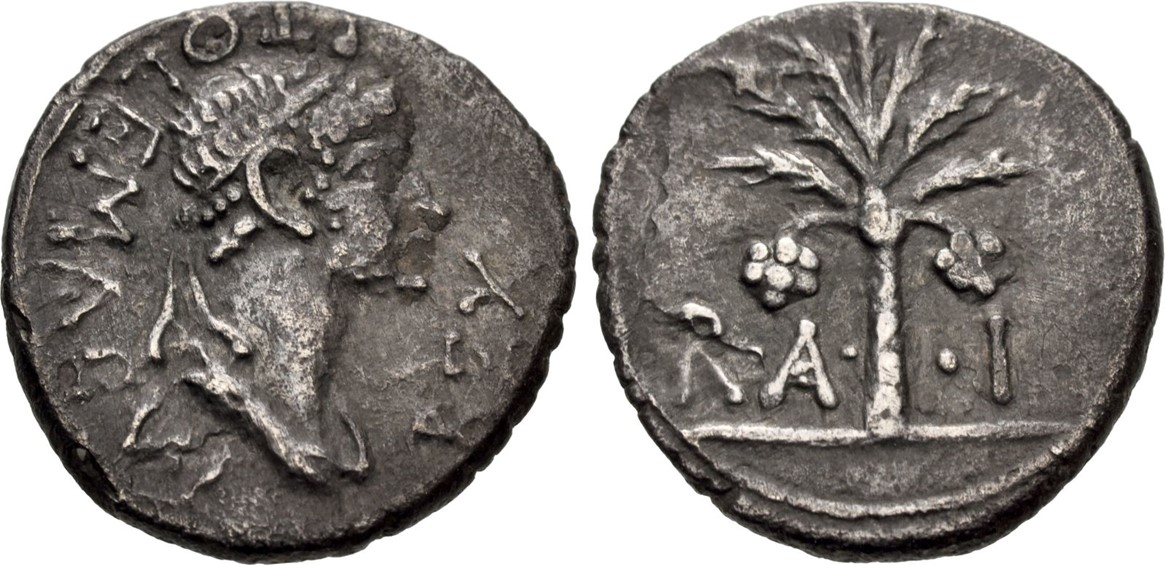 |
Even further to the west, approaching the Strait of Gibraltar, was the kingdom of Mauretania, which was ruled by Ptolemy from A.D. 20 to 40. This silver denarius was struck in Caesarea (in modern-day Algeria) near the start of his reign over this wealthy Roman client state. Emperor Caligula invited Ptolemy to Rome in A.D. 40 — and then killed him for reasons that are not clear today.
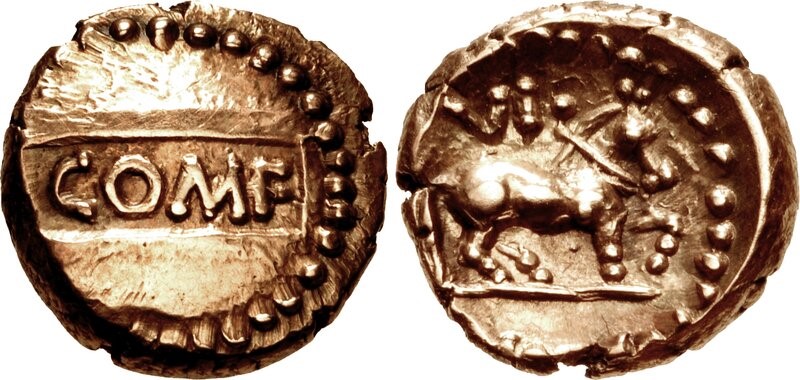 |
The Romans also had allies (and enemies) to their north. This gold quarter-stater was struck for the Celtic king Verica, one of their clients, who ruled southern England from A.D. 15 to 42. Claudius’ invasion of Britain in A.D. 43 may have been predicated on Verica being driven from power by a revolt.
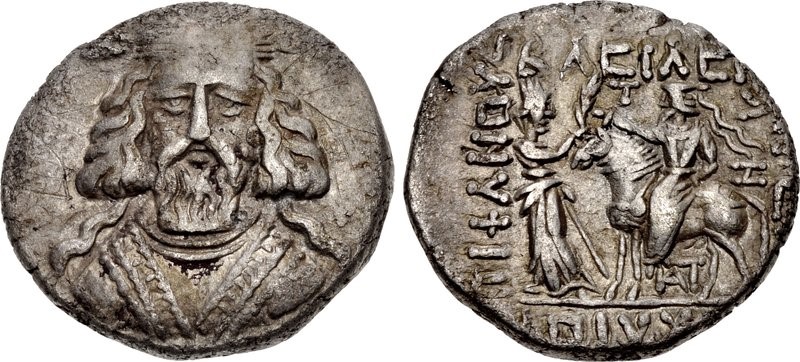 |
While Rome controlled the entire Mediterranean, the empire still faced formidable enemies, including Parthia in the Near East. This billon tetradrachm was struck under Artabanus II in A.D. 27 at Seleucia on the Tigris, near modern-day Baghdad. Artabanus II came to power in A.D. 12 by overthrowing Vonones I, who fled to Armenia and became its king for a few years.
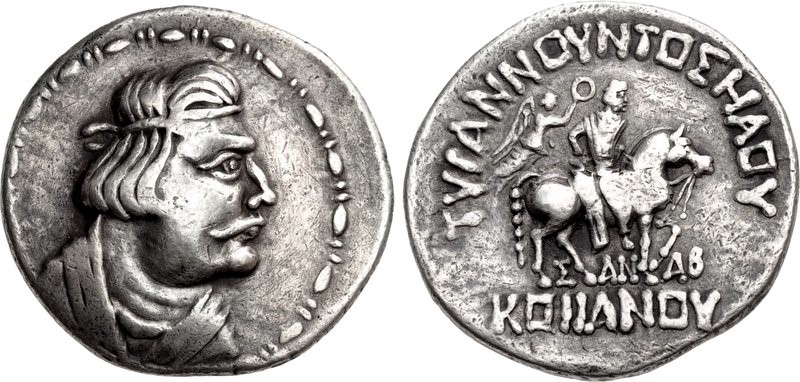 |
Still further east from Parthia was Bactria, where Greek culture has maintained a foothold several centuries after Alexander the Great’s army approached India. This silver tetradrachm, thought to have been struck in the early 1st century A.D., shows Heraios on horseback being crowned by Nike. Heraios is believed to have been a Kushan ruler in Central Asia.
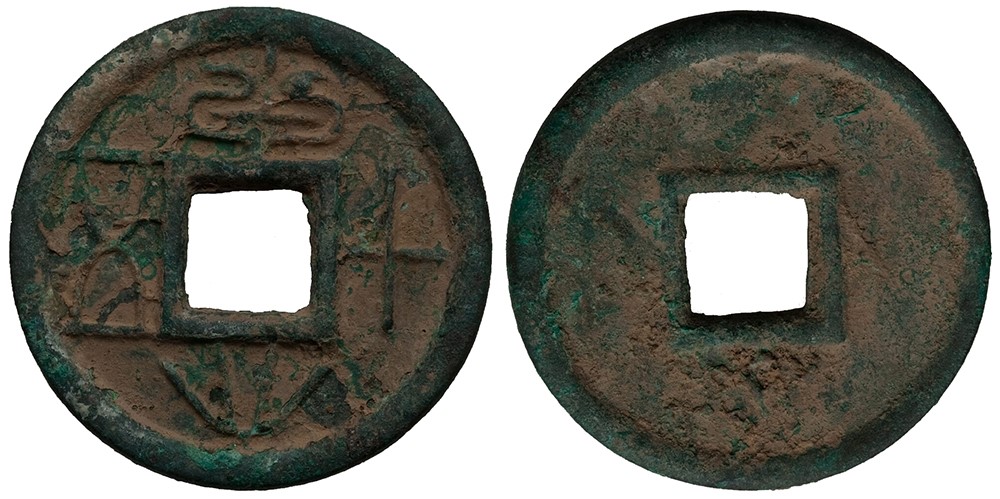 |
While NGC Ancients' services are focused on coins of the Western world struck through c. A.D. 500 (as well as the Byzantine Empire), it is important to note that China also produced coins in the early 1st Century A.D., and had been doing so for centuries. This 50 Cash was made under Wang Mang, the only emperor of the short-lived Xin Dynasty, which lasted from A.D. 9 to 23 and was based at the interior Chinese city today known as Xi’an.
Images courtesy of Classical Numismatic Group and Heritage Auctions.
Stay Informed
Want news like this delivered to your inbox once a month? Subscribe to the free NGC eNewsletter today!